
banner mobile bg

Plant and Animal De novo Sequencing

De novo assembly of plant and animal genomes to enable accurate characterization of complex genomes and species-specific genomic features.

De novo sequencing involves sequencing and assembling the genome of a species without relying on a reference genome, thereby constructing a complete genomic sequence map of the species. This approach not only provides a comprehensive genomic sequence map but also lays the foundation for further research into the species' evolutionary origins and adaptations to specific environments.


With extensive experience in experimental operations and bioinformatics analyses, Novogene offers an accurate, rapid, and comprehensive characterization of species and generates reliable results. Furthermore, Novogene’s end-to-end services guarantee you ultra-fast turnaround time.


Benefits of  Novogene’s Plant and Animal De novo sequencing service

Extensive Experience

Proven expertise in assembling reference-quality genomes for diverse plant and animal species.

High-Quality Data
High-Quality Data

Delivering high-quality sequencing data with industry-standard performance and assembly-ready contig N50.

Short- and Long-Read Integration

Flexible de novo sequencing strategies combining long-read and short-read data for comprehensive genome assembly.

Advanced bioinformatics Support

Comprehensive long-read genome assembly solutions, delivering high-quality chromosome-level assemblies with Hi-C integration.

Customer Service System (CSS)

A centralized platform for project tracking, data access, and seamless collaboration throughout your sequencing workflow.

Applications of Plant and Animal De novo Sequencing

Conservation & Evolutionary Research (Animal)

Uncovers the genetic basis of environmental adaptation, traces evolutionary history, and provides critical insights for protecting endangered species.

Agriculture & Livestock Breeding

Identifies genes associated with disease resistance, productivity, and desirable traits, enabling the development of healthier and higher-yielding breeds.

Biomedical Research & Drug Discovery

Facilitates the creation of better animal disease models (e.g., zebrafish) and aids drug discovery by revealing unique biological pathways from animals with special traits, such as cancer resistance.

Crop Improvement & Food Security (Plant)

Provides the complete genetic blueprint to empower breeding of high-yield, nutrient-rich, and stress-resilient crop varieties, ensuring global food security.

Evolution & Adaptation Studies (Plant)

Reveals evolutionary histories and deciphers the genetic mechanisms behind plant adaptation to environmental challenges.

Genetic Resource Mining

Pioneers the discovery of novel genes responsible for valuable compounds and revolutionary agronomic traits, driving innovation across agriculture and biotechnology.

Specifications

Sample Requirements

Sample amounts are listed for reference only. Download the Sample Submission Guidelines to learn more. For detailed information, please contact us with your customized requests.

Platform TypeSample TypeAmount (Qubit®)Purity
Illumina NovaSeq X PlusGenomic DNA≥ 100 ngOD260/280=1.8-2.0;

no degradation, no contamination
Genomic DNA(PCR free customized)≥ 3 μg
Genomic DNA(PCR free)≥ 1 μg
PacBio Revio DNA HiFi libraryHMW Genomic DNA≥ 3 μgA260/280=1.75-2.0;

A260/230=1.5-2.6;

*NC/QC=1.0-2.2;

Fragments should be ≥ 30 kb
Nanopore
PromethION DNA library
HMW Genomic DNA≥ 8 μgA260/280=1.75-2.0;

A260/230=1.4-2.6;

*NC/QC=0.95~3.00;

Fragments should be ≥ 30k
Nanopore Ultra-long DNA LibraryuHMW Genomic DNA (plant and animal tissues)≥ 20 μgOD260/280=1.7-2.0;

OD260/230=1.3-2.6;

*NC/QC=0.95-3.00;

Fragments should be ≥ 100k, no
fragments below 30k
uHMW Genomic DNA (blood and cells)≥ 30 μgOD260/280=1.7-2.0;

OD260/230=1.3-2.6; 

NC/QC=0.95-3.00; 

Fragments should be ≥
300K, no fragments below 30k
*NC/QC = NanoDrop concentration/Qubit concentration

Sequencing and Analysis

Recommended data outputs and analysis contents displayed are for reference only. For detailed information, please contact us with your customized requests.

Sequencing TypeShort-read SequencingPacBio RevioNanopore PromethION
Read LengthPaired-end 150 bpN50>15 kb, long read lengths up to 25 kbUltra-long reads N50 > 50 kb or 100 kb
Recommended  Sequencing DepthFor genome survey or assembly polishing: ≥ 50×

RNA requires 4 to 6 different tissue sites.
For genome assembly: ≥ 30×
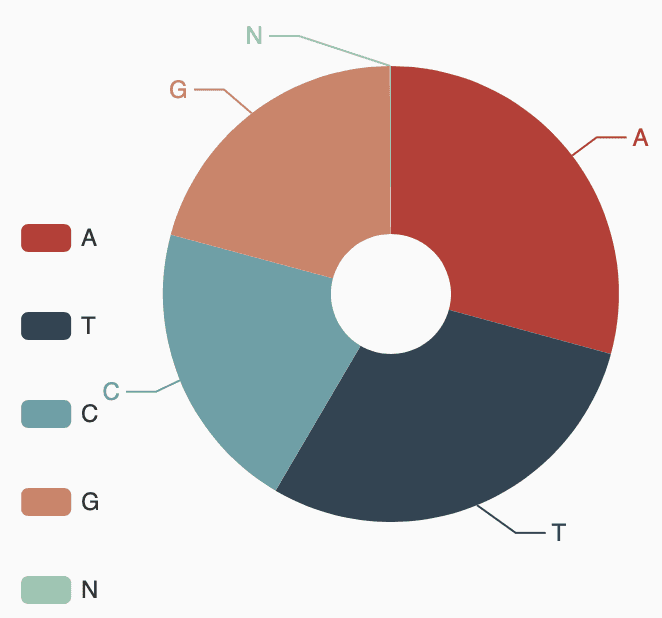
Standard AnalysisK-mer analysis
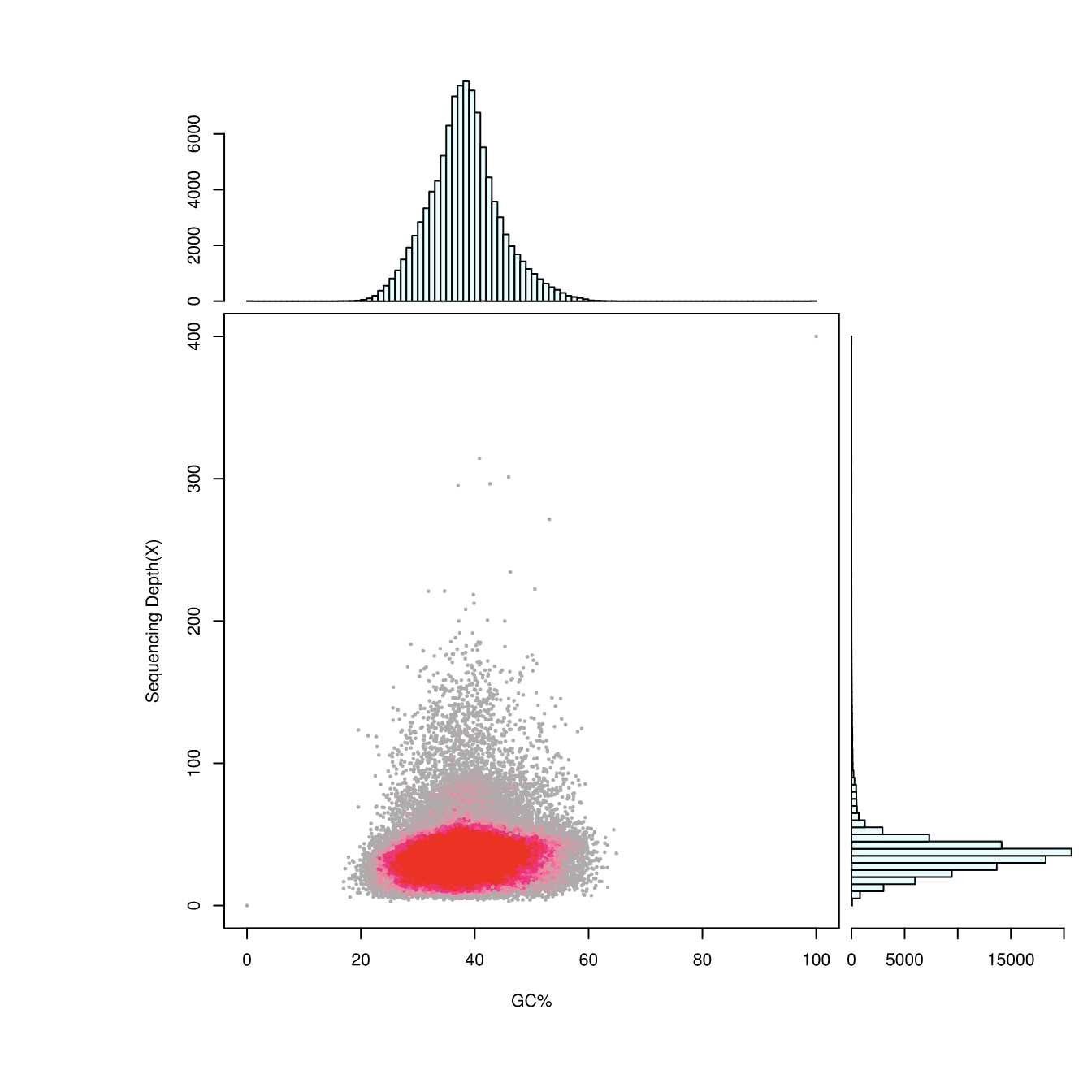
GC content analysis
Repeat content rate evaluation
Heterozygous rate evaluation
Genome size evaluation
Long-read assembly
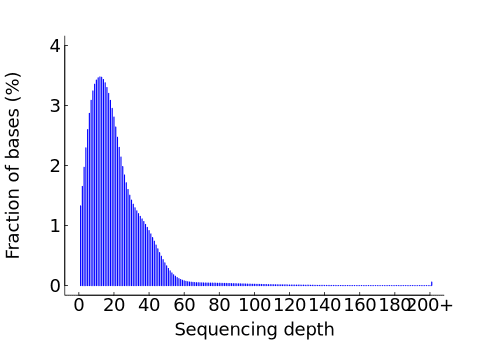
Assembly statistics
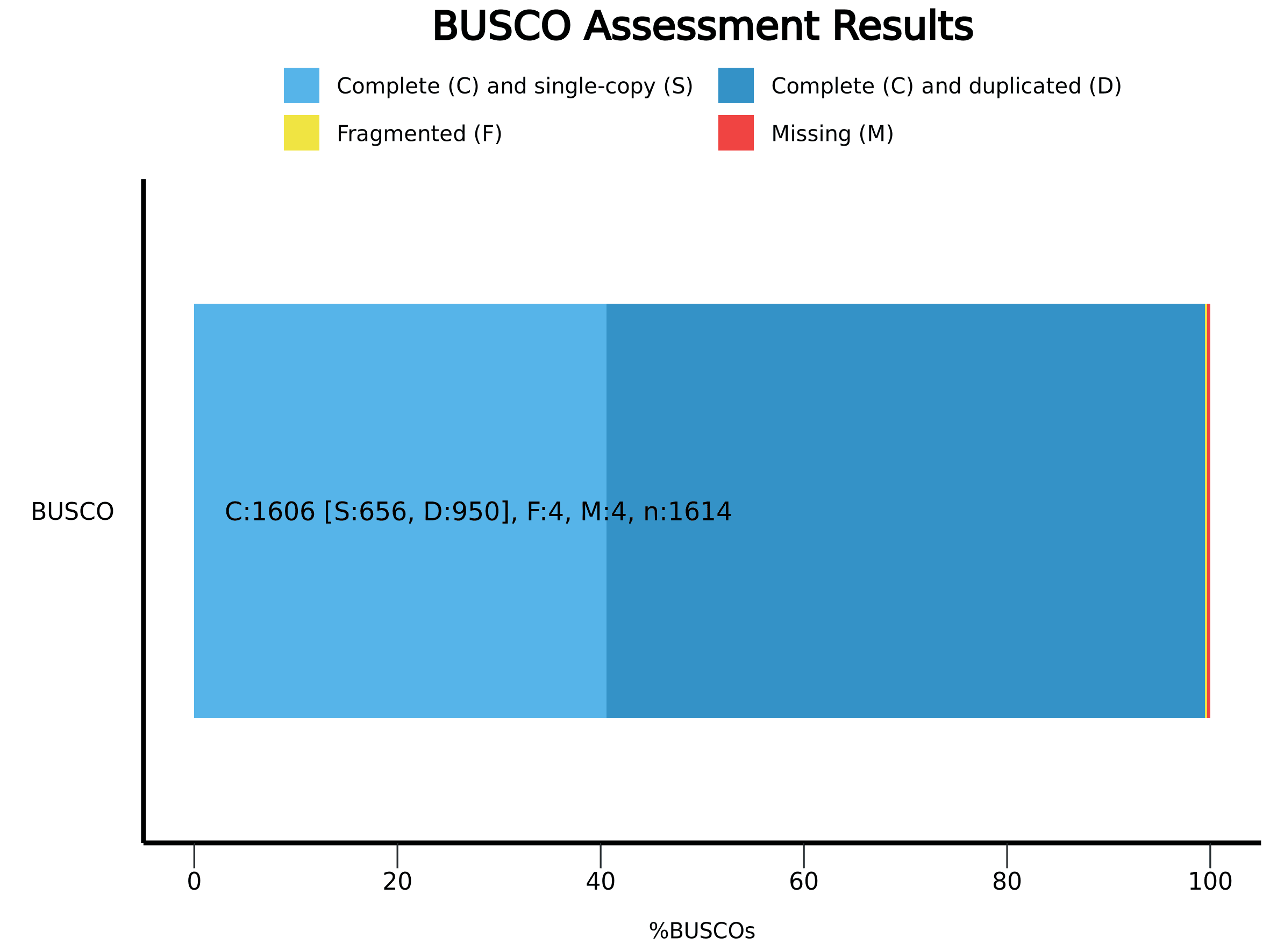
Gene completeness evaluation
Genome Annotation-Repeat prediction
Structure prediction
Function prediction
Noncoding RNA prediction
Advanced Analysis-Comparative genomics
Pan-genome analysis
Telomere-to-telomere genome assembly
Perfect telomere-to-telomere genome assembly

Project Workflow

Project Workflow

Resources

Demo Results

K-mer Analysis

Kmer=17 analyses and genome size evaluation

SampleKmerDepthn_kmerGenome_size(M)Revised_Genome_size(M)Heterozygous_rate(%)Repeat_rate(%)
plant173624,079,467,724668.87662.780.8373

(1) K-mer:Selected K-mer length.

(2) Depth:The expected value of K-mer depth.

(3) n_K-mer:The total number of K-mer from SOAPdenovo.

(4) Genome size(M):The genome size in Mb estimated by formula: Genome Size=K-mer_num/Peak_depth.

(5) Revise Genome size(M):Revised genome size after error correction from wrong K-mer.

(6) Heteozygous ratio:The percent of heteozygous positions.

(7) Repeat:Calculated by the percentage of K-mer numbers after 1.8-fold of the main peak of total K-mer numbers.

Note: The repeat here is a mathematically repeated sequence but not a repeat element with certain biological functions.

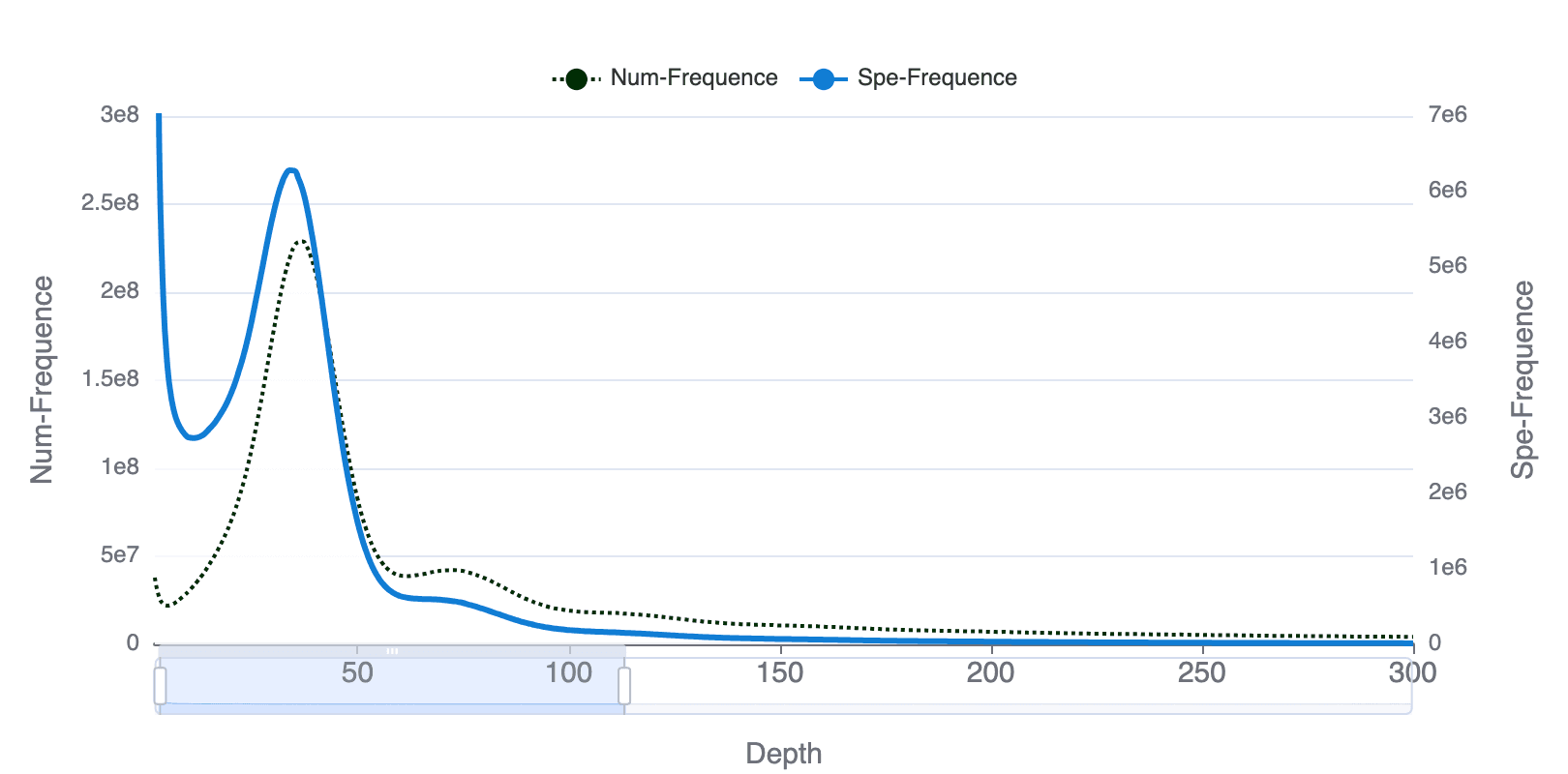
Distribution of K-mer number/type frequency and depth

X-coordinate is K-mer depth. Y-coordinate is the frequency of each K-mer depth.

Preview

Webinars

A Beginner’s Guide to Animal and Plant Whole Genome Sequencing – Re-Sequencing and De novo sequencing with Novogene

Animal and plant whole genome sequencing offers a comprehensive view of the entire genome. It has been widely applied to boost scientific research in the fields of phylogenetics population genetics, genome-wide association studies (GWAS), and agricultural breeding programs.


Resequencing on the species with an available reference genome enables genome variation calling, involving Single Nucleotide Polymorphism (SNP), Insertion and Deletion (InDel), Copy Number Variation (CNV), and structural variation (SV) among diverse individuals and populations. Whereas De novo sequencing of uncharacterized genomes empowers the De novo assembly of sequenced reads and construct the initial whole genome as genetic underpinnings, to advance the research in all disciplines of animal and plant biology.

(A Beginner’s Guide to Animal and Plant Whole Genome Sequencing – Re-Sequencing and De novo sequencing with Novogene)

Frequently Asked Questions

How to Ensure the Reliability of Assembly Results? What Are the Main Methods for Evaluating Assembly Completeness and Accuracy?

In addition to ensuring Contig N50 and Scaffold N50 metrics, it is essential to evaluate the quality of the assembly. Common evaluation methods include BUSCO, LAI, Merqury, CEGMA, EST sequence assessment, RNA sequence assessment, and consensus evaluation. Among these, BUSCO assesses the genome using a library of single-copy orthologous genes, LAI evaluates genome completeness based on long terminal repeat retrotransposons, and Merqury assesses the genome's QV (Quality Value). These three evaluation methods are currently the most widely used.

Background

Ready to Start Your Project?

Our platform offers tailored solutions for

your unique experimental needs, ensuring a seamless experience from project design to data delivery.